Chelsea Pines Inn
It was late afternoon in the Chelsea Pines Inn, a hotel in New York’s Meatpacking District that had seen decades slip through its walls. The paint peeled in thin strips, the carpet was worn to a memory of its former self, and the air held the faint scent of old wood, dust, and the ghosts of nights long past. The city outside hummed faintly, muffled by the thick walls, a quiet witness to the scene about to unfold.
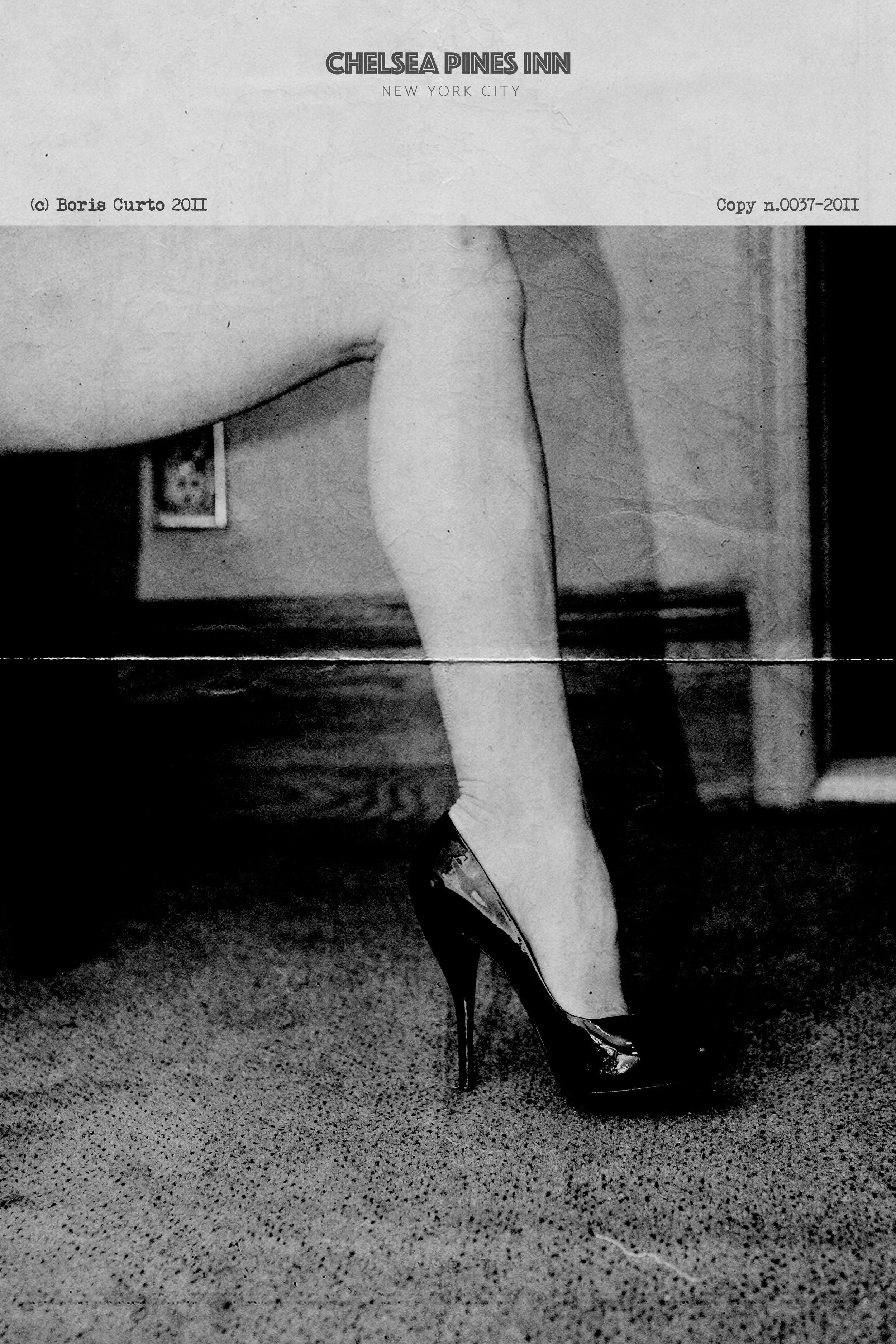
She was already there, sitting on the edge of the bed, calm yet electric. One leg stretched forward, the other bent gracefully, stiletto heels catching the slanted light through cracked blinds. I could feel the tension in the room — not mine, not hers, but in the air itself — like the hotel had been waiting for this exact moment.
I framed her leg through the lens of my Nikon F, waiting for the light to settle just right. Each shutter click captured a fragment of the room, a whisper of the city outside, a piece of memory frozen in film. Time seemed to hold its breath. The curve of her leg, the gleam of the heel, the silence of the room — everything aligned like it had been rehearsed by the ghosts of the building itself.
Later, in the darkroom, I printed the image on a sheet of vintage Chelsea Pines Inn letterhead. The paper was fragile, textured, yellowed at the edges, carrying its own story. Coating it with platinum-palladium emulsion felt like a ritual: slow, deliberate, intimate. Every shadow, every glint of light, every imperfection became part of the image — part of memory made tangible in silver.
When the print finally emerged, the light seemed to breathe within it. Chelsea Pines became more than a photograph: it was a fragment of a night, a pause in the relentless flow of time, a secret shared between the city, the hotel, and the people who had lived and dreamed there.
And in that room, with that leg, that heel, and that light, I felt the pulse of New York, the weight of the hotel’s history, and the quiet, stubborn magic of an image that refused to fade. Chelsea Pines is fragile. Electric. Alive. And it will never leave you.
It was late afternoon in the Chelsea Pines Inn, a hotel in New York’s Meatpacking District that had seen decades slip through its walls. The paint peeled in thin strips, the carpet was worn to a memory of its former self, and the air held the faint scent of old wood, dust, and the ghosts of nights long past. The city outside hummed faintly, muffled by the thick walls, a quiet witness to the scene about to unfold.
She was already there, sitting on the edge of the bed, calm yet electric. One leg stretched forward, the other bent gracefully, stiletto heels catching the slanted light through cracked blinds. I could feel the tension in the room — not mine, not hers, but in the air itself — like the hotel had been waiting for this exact moment.
I framed her leg through the lens of my Nikon F, waiting for the light to settle just right. Each shutter click captured a fragment of the room, a whisper of the city outside, a piece of memory frozen in film. Time seemed to hold its breath. The curve of her leg, the gleam of the heel, the silence of the room — everything aligned like it had been rehearsed by the ghosts of the building itself.
Later, in the darkroom, I printed the image on a sheet of vintage Chelsea Pines Inn letterhead. The paper was fragile, textured, yellowed at the edges, carrying its own story. Coating it with platinum-palladium emulsion felt like a ritual: slow, deliberate, intimate. Every shadow, every glint of light, every imperfection became part of the image — part of memory made tangible in silver.
When the print finally emerged, the light seemed to breathe within it. Chelsea Pines became more than a photograph: it was a fragment of a night, a pause in the relentless flow of time, a secret shared between the city, the hotel, and the people who had lived and dreamed there.
And in that room, with that leg, that heel, and that light, I felt the pulse of New York, the weight of the hotel’s history, and the quiet, stubborn magic of an image that refused to fade. Chelsea Pines is fragile. Electric. Alive. And it will never leave you.